With the aim of developing staff potential and helping staff keep pace with changing social needs, the Housing Authority (HA) set up the Training and Development Centre (T&DC) in the mid-1990s. Housing Dimensions invited three Senior Managers from the Human Resource Development Section to talk about training programmes for housing management, works and general disciplines, and introduce to us some interesting programmes.
Given that the HA has 8 700 staff working in numerous disciplines and that new housing policies or initiatives are frequently being introduced, how does the T&DC help HA staff deal with the changes? Senior Manager Ronnie Wu, in charge of housing management training, answers, "We aim to provide timely training to equip our colleagues for the changes. For example, in support of the department's target to obtain the ISO 14001 Environmental Management System certification for estate management, we have organised relevant training programmes starting in August for frontline colleagues and staff of outsourced property services agents in 40 public housing estates. The programmes aim to enhance their understanding of the relevant requirements of scope of certification which covers office administration, cleansing, security and landscaping. In addition, auditing skills courses are organised for staff responsible for carrying out the auditing."
Housing management training covers diverse topics, some of which are not only practical but interactive. Ronnie cites the course on handling abusive customers as an example. "We teach break-away techniques, communication skills, and measures for relieving emotion and pressure that help frontline staff deal with customers who are violent or suffer from mental illness," she says. "We also promote the importance of harmony and mutual respect between colleagues and tenants through different channels, like posters and videos." Current promotional activities include a poster slogan competition for staff on the theme of "Harmony and Mutual Respect in Serving the Public". Another interactive programme is the "Estate Management Made Simple" series which provides a good platform for experience sharing. Devised and led by an Assistant Director (Estate Management), the series introduces practical methods for handling complex housing management issues such as how to liaise with the Social Welfare Department in handling tenants' applications for housing assistance, how to address the needs of Owners Corporations in Tenants Purchase Scheme estates, the proper use of the maintenance fund, the proprietary maintenance of lifts and tree management. Colleagues have found the sharing very useful in addressing their problems and improving their work efficiency.
Senior Manager Gary Cheung, in charge of works training, explains how training helps enhance staff awareness of the latest developments in their professional fields. "Our training covers a wide range of topics, from building design, procurement and construction, to maintenance and repair after intake. Colleagues have to be equipped with the latest vocational knowledge relating to their fields," he says. Ongoing training is organised to keep colleagues abreast of the latest statutory requirements and codes of practices. In collaboration with other governmental departments and professional institutions, the T&DC runs regular seminars to introduce technological advancement to colleagues.
The Partnering Workshop is another works-related training initiative. It helps enhance service standards by fostering closer communication with stakeholders. "We start involving developers, designers, building contractors, project consultants and sub-contractors at the early stages of construction projects to enhance communication and co-operation. At the workshop, different parties also discuss difficulties that may arise, and then formulate action plans and sign a partnership charter," says Gary.
Training in housing management and works focuses on strengthening the vocational knowledge of staff. General training, meanwhile, aims at enhancing the management, communication and language skills of staff, and promoting their physical, emotional, social and occupational wellness in order that they can engage in work healthily and happily. Senior Manager Virginia Cheung, responsible for general training, explains, "We launched the Employee Wellness Programme a couple of years ago to provide colleagues with useful information on the four key areas of wellness. Seminars on nutrition and stress management, for instance, have been well received. We also organise general health and spinal marrow check-ups, and measure blood glucose and cholesterol levels." She adds, "To boost colleagues' awareness of the importance of having a good work-life balance and caring for their health, we set up a 'Health Portal'. The nutritious recipes and 'Plan a Relaxing Local Day Trip' on the Portal were contributed by colleagues themselves. We have also invited colleagues to be Health Ambassadors and share wellness information. In addition, the 'Wellness Corner' on the e-Housing Portal reminds colleagues of caring for their health."
To encourage staff to live the HA's core values, the T&DC has used the intranet to share success stories of exemplary individual staff and teams awarded in the Extra Mile Card Plan, as a way of inspiring all staff to put our core values into practice. The T&DC also produces the "Core Values Package", along with online games and the HA Fun Facts, to foster a sense of pride and commitment among staff.
To attain its vision of "Quality Housing through People Development", the T&DC offers extensive training opportunities to HA staff and promotes their diverse learning. In 2010/11, each HA staff member received an average of 32 hours of training per year, comparing favourably with private sector statistics of 17.9 hours* per employee. In addition to conventional courses and seminars, the T&DC arranges attachments, exchanges, visits and study tours, and has set up a web-based learning platform. Launched in the early 1990s, the HA's e-Learning Portal is so comprehensive that other governmental departments in both Hong Kong and Macau have drawn on our experience in adopting the system. To create a better web-based learning environment, the e-Learning Portal will be revamped at the end of August 2011.
* According to the 2010 Training and Development Needs Survey conducted by the Hong Kong Institute of Human Resources Management.







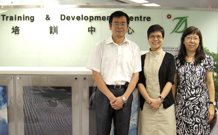 With the aim of developing staff potential and helping staff keep pace with changing social needs, the Housing Authority (HA) set up the Training and Development Centre (T&DC) in the mid-1990s. Housing Dimensions invited three Senior Managers from the Human Resource Development Section to talk about training programmes for housing management, works and general disciplines, and introduce to us some interesting programmes.
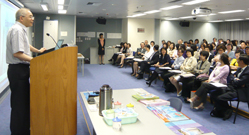 Given that the HA has 8 700 staff working in numerous disciplines and that new housing policies or initiatives are frequently being introduced, how does the T&DC help HA staff deal with the changes? Senior Manager Ronnie Wu, in charge of housing management training, answers, "We aim to provide timely training to equip our colleagues for the changes. For example, in support of the department's target to obtain the ISO 14001 Environmental Management System certification for estate management, we have organised relevant training programmes starting in August for frontline colleagues and staff of outsourced property services agents in 40 public housing estates. The programmes aim to enhance their understanding of the relevant requirements of scope of certification which covers office administration, cleansing, security and landscaping. In addition, auditing skills courses are organised for staff responsible for carrying out the auditing."
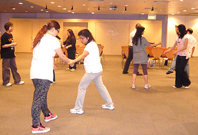 Housing management training covers diverse topics, some of which are not only practical but interactive. Ronnie cites the course on handling abusive customers as an example. "We teach break-away techniques, communication skills, and measures for relieving emotion and pressure that help frontline staff deal with customers who are violent or suffer from mental illness," she says. "We also promote the importance of harmony and mutual respect between colleagues and tenants through different channels, like posters and videos." Current promotional activities include a poster slogan competition for staff on the theme of "Harmony and Mutual Respect in Serving the Public". Another interactive programme is the "Estate Management Made Simple" series which provides a good platform for experience sharing. Devised and led by an Assistant Director (Estate Management), the series introduces practical methods for handling complex housing management issues such as how to liaise with the Social Welfare Department in handling tenants' applications for housing assistance, how to address the needs of Owners Corporations in Tenants Purchase Scheme estates, the proper use of the maintenance fund, the proprietary maintenance of lifts and tree management. Colleagues have found the sharing very useful in addressing their problems and improving their work efficiency.
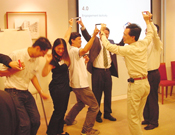 The Partnering Workshop is another works-related training initiative. It helps enhance service standards by fostering closer communication with stakeholders. "We start involving developers, designers, building contractors, project consultants and sub-contractors at the early stages of construction projects to enhance communication and co-operation. At the workshop, different parties also discuss difficulties that may arise, and then formulate action plans and sign a partnership charter," says Gary.
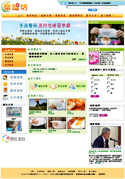 Training in housing management and works focuses on strengthening the vocational knowledge of staff. General training, meanwhile, aims at enhancing the management, communication and language skills of staff, and promoting their physical, emotional, social and occupational wellness in order that they can engage in work healthily and happily. Senior Manager Virginia Cheung, responsible for general training, explains, "We launched the Employee Wellness Programme a couple of years ago to provide colleagues with useful information on the four key areas of wellness. Seminars on nutrition and stress management, for instance, have been well received. We also organise general health and spinal marrow check-ups, and measure blood glucose and cholesterol levels." She adds, "To boost colleagues' awareness of the importance of having a good work-life balance and caring for their health, we set up a 'Health Portal'. The nutritious recipes and 'Plan a Relaxing Local Day Trip' on the Portal were contributed by colleagues themselves. We have also invited colleagues to be Health Ambassadors and share wellness information. In addition, the 'Wellness Corner' on the e-Housing Portal reminds colleagues of caring for their health."
 To encourage staff to live the HA's core values, the T&DC has used the intranet to share success stories of exemplary individual staff and teams awarded in the Extra Mile Card Plan, as a way of inspiring all staff to put our core values into practice. The T&DC also produces the "Core Values Package", along with online games and the HA Fun Facts, to foster a sense of pride and commitment among staff.