A Glimpse into the Life of Early Public Housing Residents
Hong Kong’s public housing estates are a real treasure-trove of the territory’s collective memories. While the design and facilities of early public rental housing (PRH) estates were very basic and not nearly as comprehensive as they are today, the residents in the estates were able to make their own homes and strive to succeed, while developing a strong sense of mutual care in the neighbourhood. Looking back over this unforgettable past, Housing Dimensions collected some precious old photos to show what life was like in our older PRH estates.
The units in resettlement blocks in the early days were mere cubicles with no amenities at all. Residents had to use communal bathrooms and wash clothes and cook in the common areas.
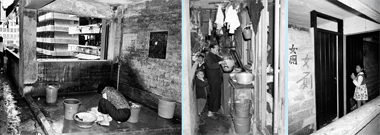
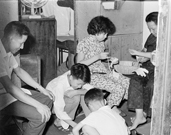
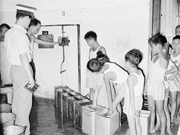 Hong Kong suffered an acute shortage of water in 1963 with the total water reserve in the reservoirs being sufficient merely for a couple of weeks of usage. Dealing with the situation, the Government implemented water rationing. Normal supply was suspended with water being provided just once every four days. It was common to see entire families carrying buckets and queuing for water around a communal tap.
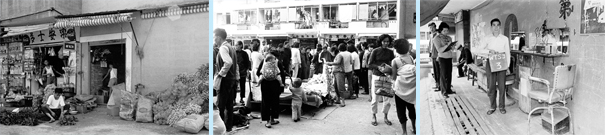
To earn extra income for their families, it was common for housewives to assemble plastic flowers at home, which became one of the most typical “home businesses” in the 1960s and 1970s. It was also quite usual to see illegal hawkers and street stalls in PRH estates. The photos below depict how residents earned their living in the early days.
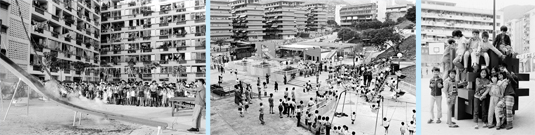
Early residents lived simple lives. The playground was thus an important venue, providing entertainment and a meeting ground for the children.
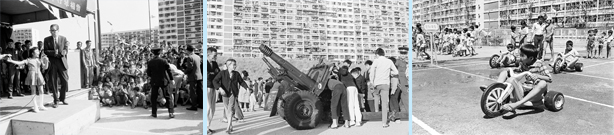
The football fields at PRH estates provided major venues for leisure activities in the early years. A number of celebrations associated with the “Hong Kong Festival” were held in PRH estates in the late 1960s and early 1970s, enabling residents to enjoy the festival.
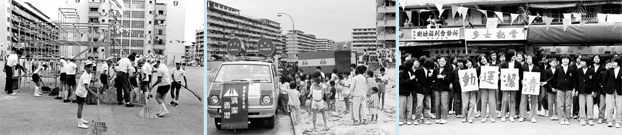
A number of major educational and promotional campaigns such as the “Road Safety Campaign”, “Prevent Fire Campaign” and “Clean Hong Kong Campaign” were launched in the territory during the 1960s to 1980s. PRH estates actively participated in these events, enhancing both safety and hygiene awareness among residents.
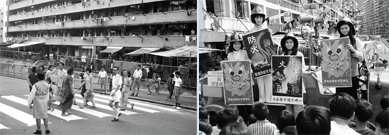
Of these campaigns, the “Clean Hong Kong Campaign” was more extensive in scale and longer in duration. Students and PRH residents paid their joint effort in cleaning their surroundings and environment.